Skip to content
Web apps built to scale
·
Since 2015
2MUCH
COFFEE
AI
Services
Technologies
Portfolio
Company
Estimator
Blog
Get a quote
AI
Services
Technologies
Portfolio
Company
Estimator
Blog
Contact us
Tag
Engineering
AI development
How to Build Fintech Software in 2026 (and What's Still Standing in 2028)
Most fintech products don't fail on the features. They fail on the money math, and the money math was never what the demo showed. A builder's map to what decides it: idempotent payments, an immutable ledger, reconciliation that ties out, and the moat that compounds by 2028.
Jul 2026
EdTech
The Compliance Fortress: Biometric Privacy, GDPR, and COPPA for EdTech Platforms
The thing that ends an edtech company usually isn't a competitor, it's a lawyer. Pearson paid $18.2M to settle a biometric privacy case for scanning faces without consent. In this market, compliance is a load-bearing part of the build, and most how-to guides skip it entirely.
Jul 2026
AI development
Online Exam Proctoring as a Chrome Extension: Integrity Without the Spyware Reputation
Students will smear lotion on a webcam to blind the proctoring AI. That's the real state of the art on the cheating side, and it's exactly why verified practice is worth more, not less, as AI makes cheating trivial. How to build integrity as signals plus a human, not surveillance theater.
Jul 2026
AI development
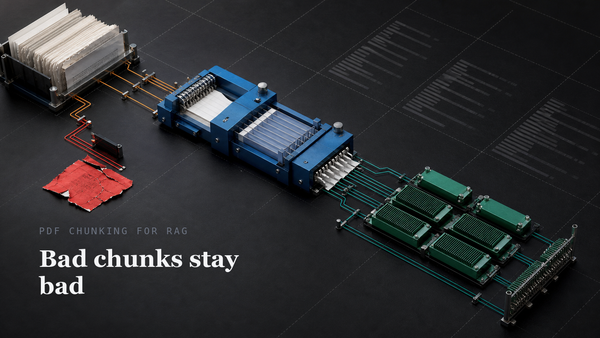
PDF Chunking for RAG: Route OCR by Page, Keep Table Headers Attached, Re-index the Delta
Every RAG demo works on a clean PDF. Then you point it at a decade of scanned contracts and it returns confident nonsense. The chunk is the unit of retrieval, and three moves decide whether yours are any good: route OCR by page, keep table headers attached, re-index the delta.
Jul 2026
EdTech
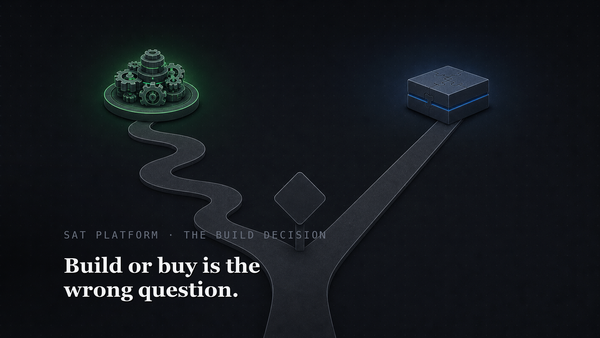
Build vs White-Label for an SAT Prep Platform: When Each One Wins
The most expensive mistake in this market is building the wrong half. The real question isn't build or buy, it's what the platform is to you: a channel for your tutoring, or the product itself. One answer is a few weeks, the other is the right call only if the hard engine is your actual edge.
Jul 2026
AI development
Agentic RAG: Why Retrieval Is the Layer Under the Agent
Classic RAG is a straight line: retrieve once, then answer. Agentic RAG is a control loop, an agent that decides what to fetch, whether it was enough, and whether the question is answerable at all. Here is the real graph, and when the loop is worth its cost.
Jun 2026
AI
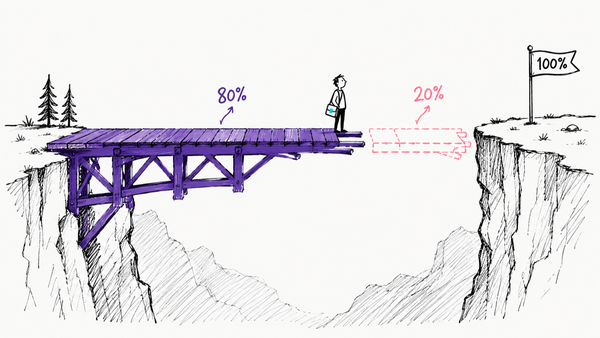
The 80% Problem: Your AI-Built MVP Is a Verdict, Not a Draft
AI gets you to 80% of a product in a weekend, then stalls on the 20% that decides whether it survives real users. Most founders try to finish it. The smarter move is to read it: that 80% is a cheap verdict on whether the idea earns the expensive part.
Jun 2026
Bun
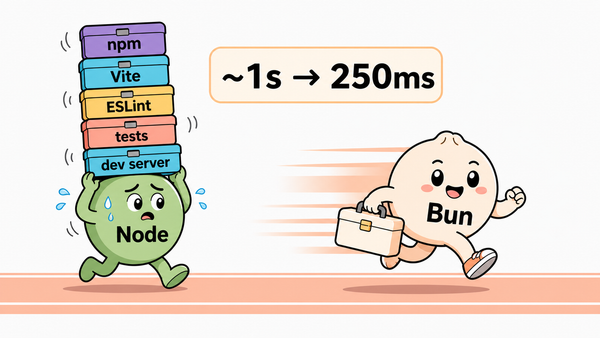
Bun vs Node.js: I Swapped a Real TypeScript Project to Bun
I swapped a real React and TypeScript project from Node.js to Bun and timed what changed. The runtime swap barely moved the build. The real speedup came only when Bun replaced more of the toolchain.
Jun 2026
Angular
The 2muchcoffee Angular Manifesto: Modern Angular in 2026 (Signals, Standalone, Zoneless)
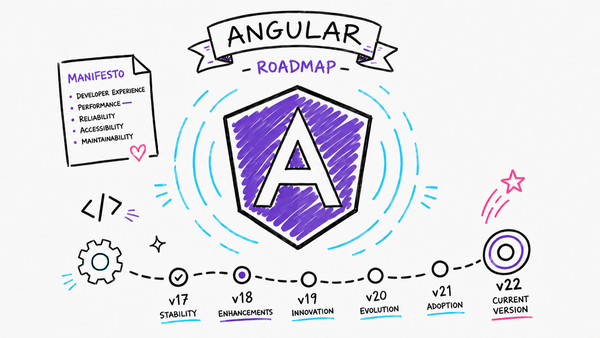
The Angular that made you write NgModules, decorate every input, and trust zone.js is gone. Signals, standalone by default, and as of v21 no zone.js at all. This is how we actually write Angular in 2026, rule by rule, with the code.
Jun 2026
AI development
How to Actually Evaluate Your RAG: Evaluation Metrics, Golden Datasets, and the Regression Gate
'It feels better' is not a number. RAG evaluation metrics for both halves, a six-step golden dataset build, a pytest regression gate and two judge checks, so your next RAG change is measured before it ships.
Jun 2026
AI development
How to Build an SAT Prep Platform in 2026 (and What's Still Standing in 2028)
If you sell SAT prep, you spent 2026 watching Google give it away free. The niche survives because the easy half is free and the hard half, the part a junior or an AI gets wrong, is the whole business. A builder's map to a digital-SAT platform, and what's still standing in 2028.
Jun 2026
AI development
Vector Database for RAG: Pinecone vs Qdrant vs pgvector (2026)
The best vector database for RAG is the one that fits your hardest constraint. A Tech Lead who runs Qdrant compares Pinecone, Qdrant, pgvector, Weaviate, Milvus and Chroma on data residency, scale, hybrid search and filtered recall, every vendor fact checked against its docs on 30 October 2026.
Jun 2026
←
Newer Posts
Page 3 of 4
Older Posts
→