Web apps built to scale Since 2015
2MUCHCOFFEE Get a quote
Blog

Engineering notes from the builds we ship

Web, mobile and AI development, and the product decisions around them, from a team building software since 2015.
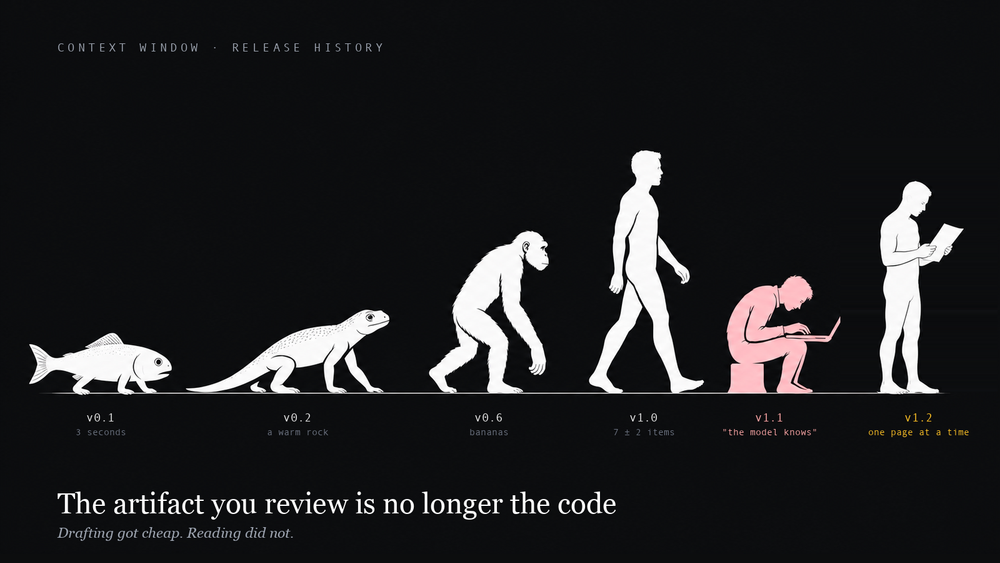
Featured AI development Spec-Driven Development: What Actually Changes When the Doc Comes First Most explanations of spec-driven development define the term. This is the loop we actually run, why the spec became the reviewable artifact once a model could write the code, and what it costs to keep it running. Read article

A good place to start if you are new here.

All popular articles

Latest

Everything we publish, newest first.
Page 1 of 25
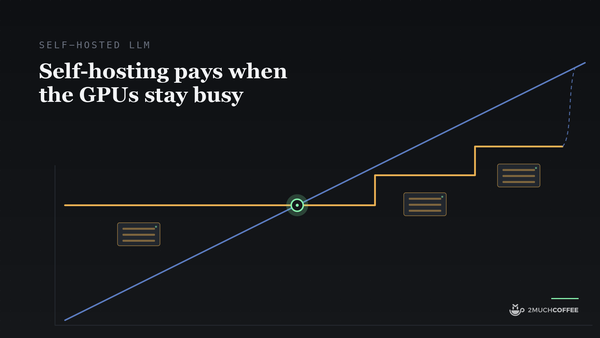
  1. AI development Self-Hosted LLM in 2026: When the Bill Justifies Running Your Own Model Revolut serves an open-weight model to about 2,000 engineers on 56 GPUs at 30 cents per million tokens. The break-even formula behind a self-hosted LLM, the one-node floor a smaller team hits first, and the router that keeps it safe.
  2. AI development Claude Code vs Cursor in 2026: Which One a Team Should Standardize On Cursor grew out of a code editor, with Agent in the side pane next to the file; Claude Code is an agent that works from the terminal and the repository. For a team, the choice turns on where the work happens, what a seat buys on Cursor's new October plans, and one rules file both tools read.
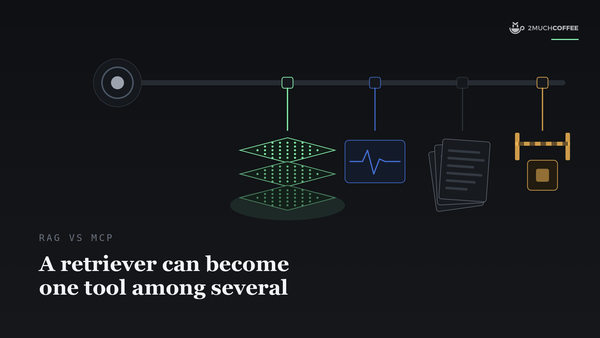
  3. RAG RAG vs MCP: Where Retrieval Ends and the Tool Protocol Begins RAG decides which passages a model reads. MCP is how an AI application finds and calls a system's tools. A retriever can become one MCP tool among several, and four decisions follow: where the search lives, who keeps it fresh, whose rows it returns, and who approves the call.
  4. Hiring Staff Augmentation vs Managed Services vs Project Outsourcing: Who Owns the Outcome Staff augmentation, managed services and project outsourcing differ on cost and control. The difference that decides it is ownership: who carries the delivery risk, who replaces a person who leaves, and who owns the code.
  5. AI development Claude Code vs Codex in 2026: Notes From a Team That Runs Both We gave Claude Code and Codex two open GitHub issues, a Python feature and a TypeScript bug fix, three runs each, graded by tests we kept back. All twelve runs passed. Price per change, the shape of each diff and the review step are where they split, with every number and the method shown.
  6. PropTech The Real Estate Advisor's AI Copilot: Capture the Call, Draft the Deal Docs When an agent takes the deal terms on a call, those terms can get re-keyed into paperwork more than once. The copilot captures the call and drafts the documents from vetted templates, with a human approving every draft, because a deal document the AI gets wrong is a liability.
  7. AI development PDF Parsing for RAG: pdfplumber, PyMuPDF, Docling, Marker and MinerU on Page 300 of a Long Manual We ran pdfplumber, pypdf, PyMuPDF, pymupdf4llm, Docling, Marker and MinerU over a 400-page slice of the PostgreSQL manual, a two-column paper and a 1947 scan, and measured headers in the chunk, footnotes, a page-spanning table, OCR and cost per 1,000 pages, with the licence beside each.
  8. AI development Spec-Driven Development Tools: What Each One Is, From a Team That Uses None of Them Spec Kit, Kiro, OpenSpec, BMAD and Tessl, read from their own docs and changelogs rather than their launch posts. What each actually is, what it costs to adopt, and why the tool layer churns while the practice does not.
  9. AI development Spec-Driven Development: What Actually Changes When the Doc Comes First Most explanations of spec-driven development define the term. This is the loop we actually run, why the spec became the reviewable artifact once a model could write the code, and what it costs to keep it running.

Contact our team

Do you have an idea for your next project? Not sure what tech stack or business model to choose? Share your thoughts and our team will assist you in any inquiry.