
Edtech software
that students actually finish
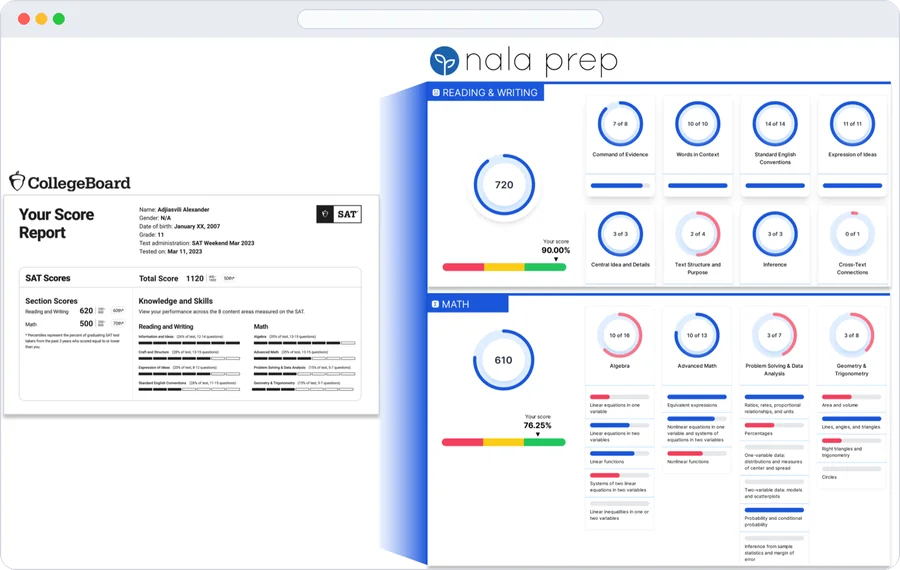
Most learning products lose people long before they learn anything. The hard part is not putting content on a screen; it is the engagement loop, the assessment that has to be fair, the AI help that has to stay accurate, and the student data that has to be handled correctly. That is the half we have shipped before, including NALA Prep, a digital SAT platform with adaptive scoring, more than 10,000 practice questions, and over 30 full-length tests.
Get a build estimateThe hard part is not the video player
Retention is the product
Learners sign up motivated and drift away by week two. Everything that holds them long enough to actually learn is a system you design on purpose (onboarding, streaks, spacing, and the sense of progress), not a feature you bolt on at the end.
Assessment has to be fair and hard to game
A score only means something if the assessment behind it is sound. Adaptive difficulty, item banking, and anti-cheating are real engineering, and a test people can game quietly is worse than no test at all.
Student data is sensitive and regulated
FERPA and COPPA pull on how you store, separate, and expose learner data, most of all for anything aimed at K-12. Handling it correctly is architecture from the first schema, not a policy page added later.
Four systems, one product
Uploading lessons is the easy 20 percent. The 80 percent that decides whether people come back and whether they learn is the half that is hard to build and easy to get wrong.
Adaptive learning and assessment
A path that adjusts to the learner, scoring that means something, and a question bank that stays fair and hard to game. NALA Prep is exactly this at SAT scale.
Content and authoring
The tools your team uses to build, version, and ship courses and question banks without an engineer in the loop for every change.
AI study tools with guardrails
Transcription, summarization, and feedback that answer from the actual course material, not from a model’s imagination. Our engineers built the speech-to-text engine for an edtech platform that turns lectures into structured, searchable notes with WhisperX.
Learning analytics
Progress, mastery, and cohort views that tell a teacher or an admin what is actually working, built on data you can trust.
The stack we build on
Chosen to fit the learning problem rather than the other way around. Web on React and Next.js, mobile on React Native, and AI study features on a grounded retrieval setup, with WhisperX and Stripe in the mix.
How an edtech build starts
One senior team that has shipped adaptive learning, AI study tools, and student-data safety before.
Tell us what you are building
A short call to understand the product, the learners, and which of the four systems you need on day one versus later.
We scope it and match a team
We agree the build plan, the timeline, and a senior team across web, mobile, AI, and data that fits your stack and your compliance needs.
Senior people ship it
Your team builds, backed by design, QA, and code review, with the learning loop and the data posture tested from the first sprint.
Engagement models
Pick the model that fits your stage. You can change it as your roadmap changes.
Dedicated developer
One senior engineer, full-time on your learning platform and managed by you.
- Full-time on one platform
- Works in your tools and process
- Design, QA and code review behind them
- Monthly rate, scale up or down
Best fit for an ongoing roadmap.
Dedicated team
A cross-functional pod covering LMS, mobile apps, and teacher dashboards, ready to ship end to end without growing your headcount.
- LMS, apps and dashboards in one pod
- Ships end to end
- No new headcount
- Scales with the roadmap
Best fit for a build that spans several layers at once.
Project-based
A scoped build, delivered end to end against a fixed plan, price, and timeline.
- Fixed scope and plan
- Fixed price and timeline
- Delivered end to end
- Handover included
Best fit for a defined piece of work with a clear finish line.
Case studies
Products our engineers shipped under the same kind of constraints.
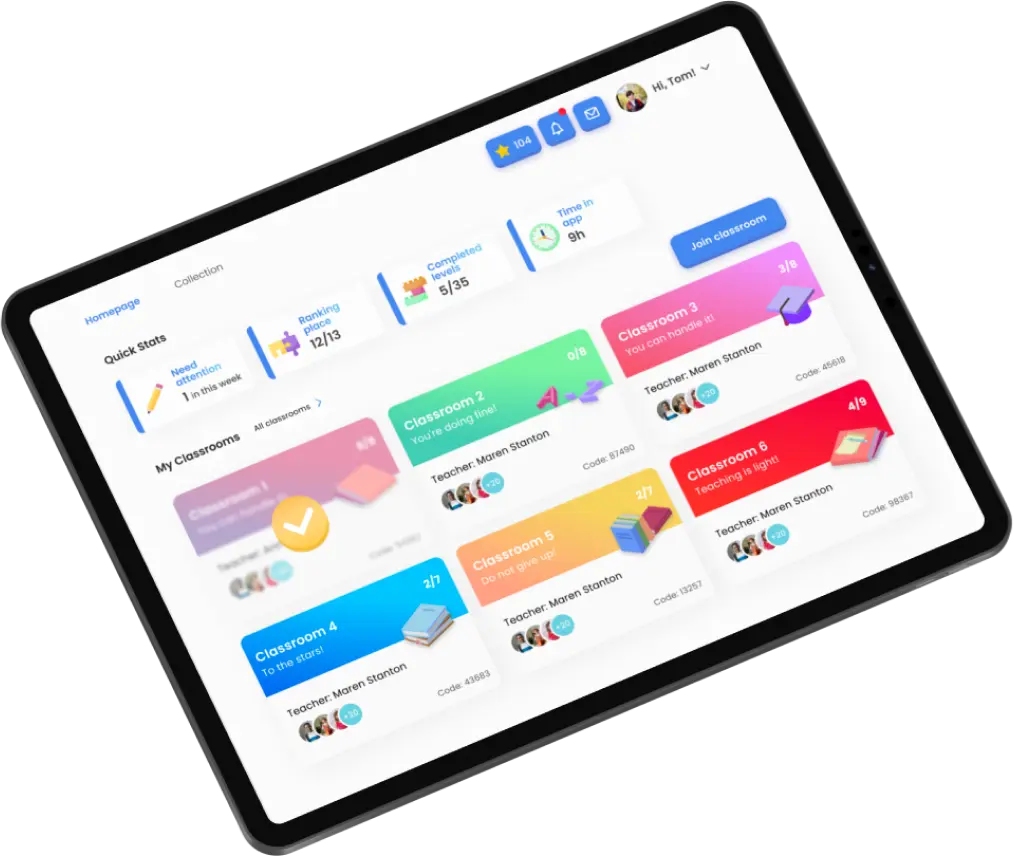
Building edtech that has to teach and measure?
Tell us what you’re building and we’ll scope the learning, assessment, AI, and data systems with you.
Get a build estimateQuestions
How long does it take to build an edtech MVP?
It depends on how much of the four-system stack (adaptive learning, content authoring, AI tools, analytics) you need on day one versus later. We scope it with you before quoting rather than guessing at a number, and we start with the smallest version that can actually teach and measure.
Can you build adaptive learning and real assessment, not just quizzes?
Yes. NALA Prep is an adaptive SAT platform with performance tracking and a large question bank, and adaptive scoring plus a fair, hard-to-game assessment engine is the part of edtech we specialize in.
How do you handle student data privacy, FERPA, and COPPA?
We design for it from the schema up: least-privilege access, clear separation of student data, and a privacy posture built to withstand scrutiny, which matters most for anything aimed at K-12.
Can you add AI tutoring or summarization without it giving wrong answers?
Yes, and the accuracy is the engineering. We ground the AI in the actual course material and constrain what it can assert, the same discipline behind our WhisperX transcription work, so help stays correct instead of confidently wrong.
Do you build for accessibility?
Yes. Accessibility is a legal and a market requirement in education, so we build to WCAG from the start rather than retrofitting it, which also widens who can use the product.
Contact our team

 Our team contacts you within 24 business hours
 We collect all the key requirements from you
 The team of developers prepares estimation
 We can sign NDA since we respect the confidentiality of our clients