US K-12 educational literacy app

About the project
A story behind the project
The app was created to help kids develop key literacy skills and cultivate their love for reading. Our client was looking for a team to create a user-friendly and feature-rich web admin panel and mobile app from scratch, and the crucial element was proficiency in developing complex projects on a modern tech stack.
The educational app we developed puts the power of technology into practice. Gamification motivates young students to complete levels in a game while learning, and the design centers on reading comprehension, fluency, phonetics and vocabulary.
COPPA significantly influenced the development process: the logic of the app meets the requirements that govern collecting and operating personal information online from a child under 13. Teachers get a wide range of educational content within the platform, and parents can keep the learning going outside the classroom.
Services
Tech stack
We provided full-cycle development from the product discovery phase to QA testing and support, building the app on Angular and Ionic for the frontend and Nest.js, GraphQL and MongoDB for the backend.
What the app had to get right
Problem
Testing children to determine their reading level
Solution
The app assesses a kid’s level of reading and creates instructions tailored to the student’s needs, so exercises match where the child actually is rather than where the curriculum assumes they are.
Problem
COPPA compliance
Solution
COPPA imposes rules on collecting and operating personal information online from a child under 13 years of age, and it shaped the logic of the app: what is collected, who can see it, and how accounts are created at all.
Problem
Three roles, three different products
Solution
The app has three user roles with different access. The student collects points and completes levels while meeting learning goals. The teacher tests literacy level, issues assignments, monitors the process and prepares progress reports. The parent checks the academic success of their child.
Problem
Classrooms and reporting
Solution
Depending on the class, children can be put together into flexible groupings. Classrooms help teachers monitor the learning process and issue assignments, and the list of students with their performance lets teachers build class-progress reports that frame the educational program.
Problem
Motivation that lasts longer than a lesson
Solution
Word puzzles and audio exercises reinforce spelling, animations motivate sight recognition of words in an interactive way, and kids interact with the app at their own pace. Weekly reports keep parents in the loop, and exams close the loop on a completed course.
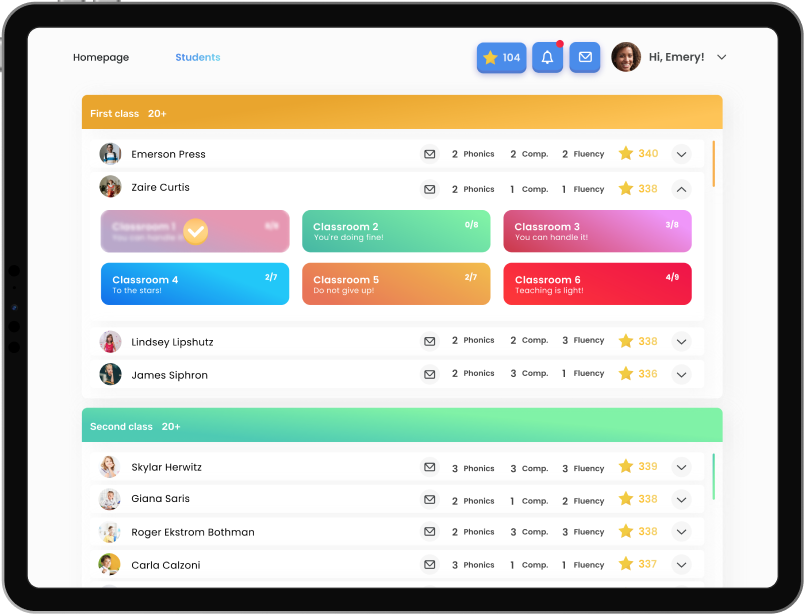
User rolesStudent, teacher and parent each get a role built for what they actually do in the app. 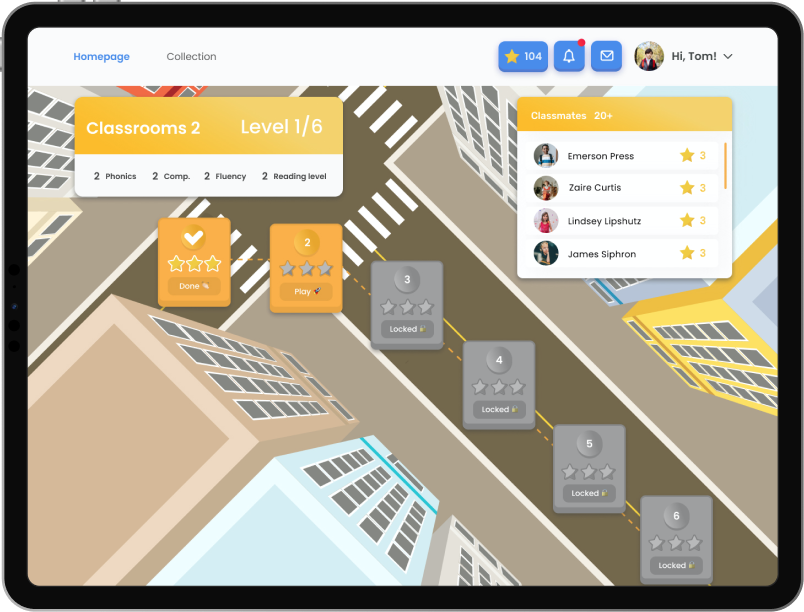
ClassroomsClassrooms group students so teachers can issue assignments and track progress as a group. 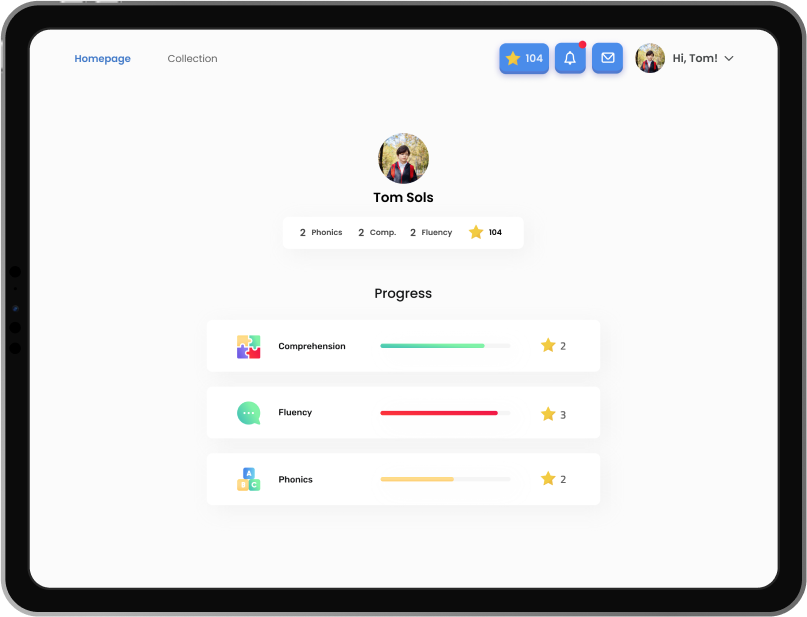
Student profileA student’s own reading progress, gamified into levels and points.


Results
Our team developed a tool that transforms a kid’s educational experience into practical knowledge. The e-learning reading application is a commercial product under NDA, suitable for both in and out of class learning.
We adhered to a research-driven approach and applied the best practices of UI/UX design: high usability and seamless performance stayed at the center of the design, from the student profile to the teacher’s reports.
Building something in this shape? Tell us about it, or get a range in two minutes.
Questions about this build
Who built this K-12 literacy app?
2muchcoffee built the app for a client under NDA: an educational literacy app that uses interactive games to develop early reading and literacy skills in children.
Can 2muchcoffee build educational apps for children?
Yes. This case pairs game-based literacy practice with the accessibility, COPPA compliance, and safety considerations that apps for children require, across a web admin panel and native iOS and Android apps.