Build vs White-Label for an SAT Prep Platform: When Each One Wins
The most expensive mistake in this market is building the wrong half. The real question isn't build or buy, it's what the platform is to you: a channel for your tutoring, or the product itself. One answer is a few weeks, the other is the right call only if the hard engine is your actual edge.
 Updated
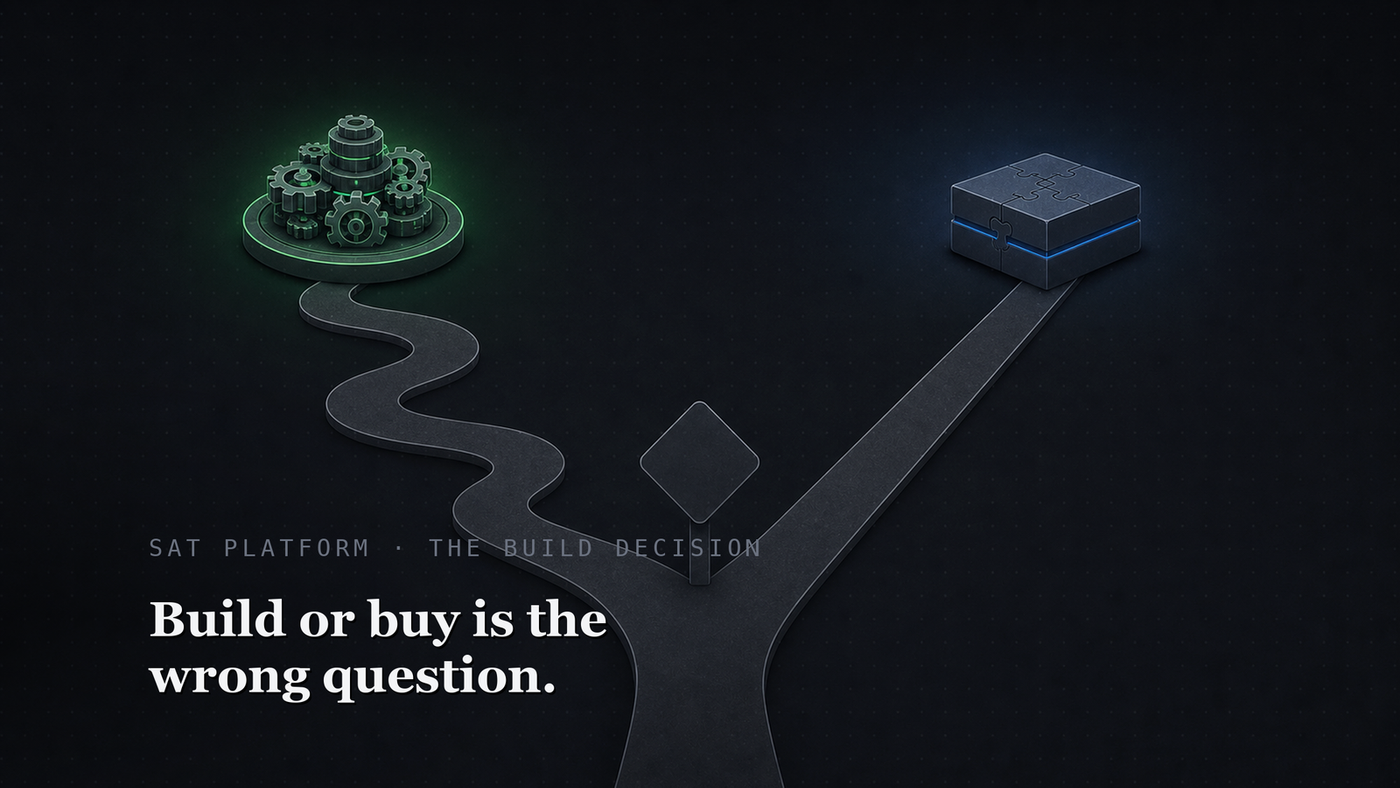
The most expensive mistake in this market is building the wrong half. A tutoring business that needs a branded app by next term doesn't need a custom adaptive engine, it needs a working platform with its logo on it, and building one from scratch will cost it several times what buying would, for a worse result shipped a year later. The opposite mistake is just as costly: a company whose entire pitch is a smarter engine buying a generic white-label box that sands off the one thing that made it different.
So the real question isn't build or buy. It's what the platform is to you.
Buy when the platform is a channel
If the platform is a way to deliver the teaching you already sell, buy it. The white-label market is real and decent. Some platforms hand you a branded app with a few thousand calibrated questions and a stack of adaptive tests for a per-student fee; others charge a flat enterprise rate and let you pour your own curriculum in. Either way you're live in weeks, not quarters, and you spend your engineering budget on teaching instead of rebuilding an adaptive test that already exists. For a tutoring business, that's almost always the right call, and the instinct to build your own is usually ego, not strategy.
Build when the platform is the product
You build custom edtech when the platform itself is the thing customers pay for. If your differentiation is the adaptive engine, the diagnostic data, or an integrity layer nobody else has, a white-label box will flatten exactly that, because it was designed to be generic for everyone. The buyer who has tried the generic tools says the same thing every time: it never understood the stakes or the pedagogy. That's not a feature gap you file a ticket for, it's the gap between a vendor's roadmap and your own. There is more room in that gap than most founders assume, because nobody actually leads SAT prep right now: the field is fragmented, and the serious players build their own engines for exactly this reason.
If your edge lives in the gap between a vendor's roadmap and your own, you cannot rent it.
The cost points the same way the logic does
The numbers line up with the reasoning. Custom development runs several times the cost of buying off the shelf, and the expense isn't where most people expect. The hard part of a real SAT platform isn't the screens, it's replicating the College Board's adaptive scoring with enough fidelity that your 1300 means a 1300, plus the math rendering and the compliance posture underneath it. Buy, and you're paying a vendor to have already solved that. Build, and you're signing up to solve it yourself, which is the right move only if solving it is the business, so get a real estimate for your build before you commit to that path.
The line moves toward buy
Over the next two years this gets easier to call, and it moves toward buy for most people. As AI commoditizes the content and the basic app, the slice actually worth building from scratch narrows to the few hard layers that compound: the calibration, the outcome data, the integrity. If your differentiation is one of those, build that layer and assemble the rest around it. If it isn't, the honest answer is that you're a tutoring business, not a software company, and your money belongs in teaching.
FAQ
Should you build or buy an SAT prep platform? The real question is not build or buy, it is what the platform is to you. If it is a way to deliver teaching you already sell, buy it. If the platform itself is the thing customers pay for, build the layer that makes it different and assemble the rest around it.
What is a white-label learning platform? A branded app you license rather than build. Some hand you a few thousand calibrated questions and a stack of adaptive tests for a per-student fee; others charge a flat enterprise rate and let you pour your own curriculum in. Either way you are live in weeks rather than quarters.
When does building a custom platform make sense? When your differentiation is the adaptive engine, the diagnostic data, or an integrity layer nobody else has. A white-label box is built to be generic for everyone, so it flattens exactly that. If your edge lives in the gap between a vendor's roadmap and your own, you cannot rent it.
How much more does custom edtech cost than white-label? Custom development runs several times the cost of buying off the shelf, and the expense is not where most people expect it. The hard part is not the screens, it is replicating the College Board's adaptive scoring with enough fidelity that your 1300 actually means a 1300.
What is the hardest part of building an SAT platform? The adaptive scoring, plus the math rendering and the compliance posture underneath it. Buy, and you are paying a vendor to have already solved that. Build, and you are signing up to solve it yourself, which is the right move only if solving it is the business.
Is the build-versus-buy line moving? Toward buy, for most people. As AI commoditizes the content and the basic app, the slice worth building from scratch narrows to the few hard layers that compound: the calibration, the outcome data, the integrity. If your differentiation is not one of those, you are a tutoring business rather than a software company.
What 2muchcoffee covers
We do both sides of this with clients, building the custom engine when it's the real differentiator and integrating or extending a platform when it isn't, and the first call is usually which of those a client actually is. If you're staring at a build-or-buy decision and the vendor demos all blur together, that's the conversation to have before you sign anything. The plain way in is the AI work we do.
One concrete action
Write one sentence: the reason a student would pick your platform over the free official one. If that sentence is about your teaching or your brand, buy the platform and put your effort there. If it's about something the software itself does that nothing else does, that's the layer to build, and only that layer. This is one decision inside building an SAT prep platform, and getting it wrong is the most expensive line on the list.