Stepler, Sweden’s #1 fitness app in 2020
About the project
About Stepler
Stepler is a step tracker from Sweden that turns walking into points and points into real products. The idea was an alternative to a gym card: something you carry in your pocket and use whenever you can.
It launched as the #1 fitness app in the Swedish App Store and grew to millions of users across 12 markets, with reward partners like Nike and Adidas.
steplerapp.comChallenge
The app had to stay simple and elegant while counting steps accurately on every phone, syncing them across devices, and running a rewards economy behind it.
The business was expected to grow fast, so the architecture had to hold millions of users and a growing catalogue of partners without a rewrite.
What we delivered
Full-cycle development for iOS and Android from one codebase: business analysis, mobile design, development, QA, and support after release.
Tech stack
Clean code and intuitive design came from React Native on the front end and Node.js, NestJS, GraphQL and MongoDB on the back end. The mobile app was integrated with a number of systems for a friendly and powerful experience: the Zendesk ticket system for order management, for example.
Thanks to the integration with Apple Health and Google Fit, the app reads user step data. The app synchronizes all steps from the first sign in. In case the app was deleted at some point, the step data will continue to be synchronized until the present moment. Due to modern tech solutions, Stepler can store and manage enormous data of step records in such a way that a user can quickly work with them.
- React Native
- Node JS
- Nest JS
- GraphQL
- MongoDB
- Zendesk
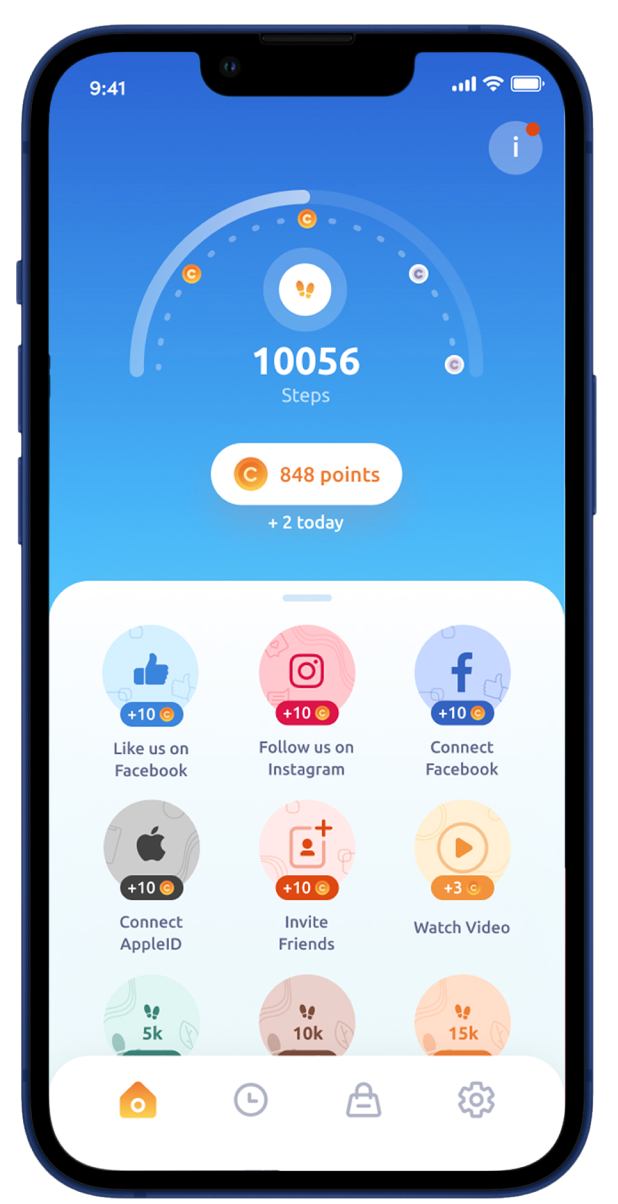
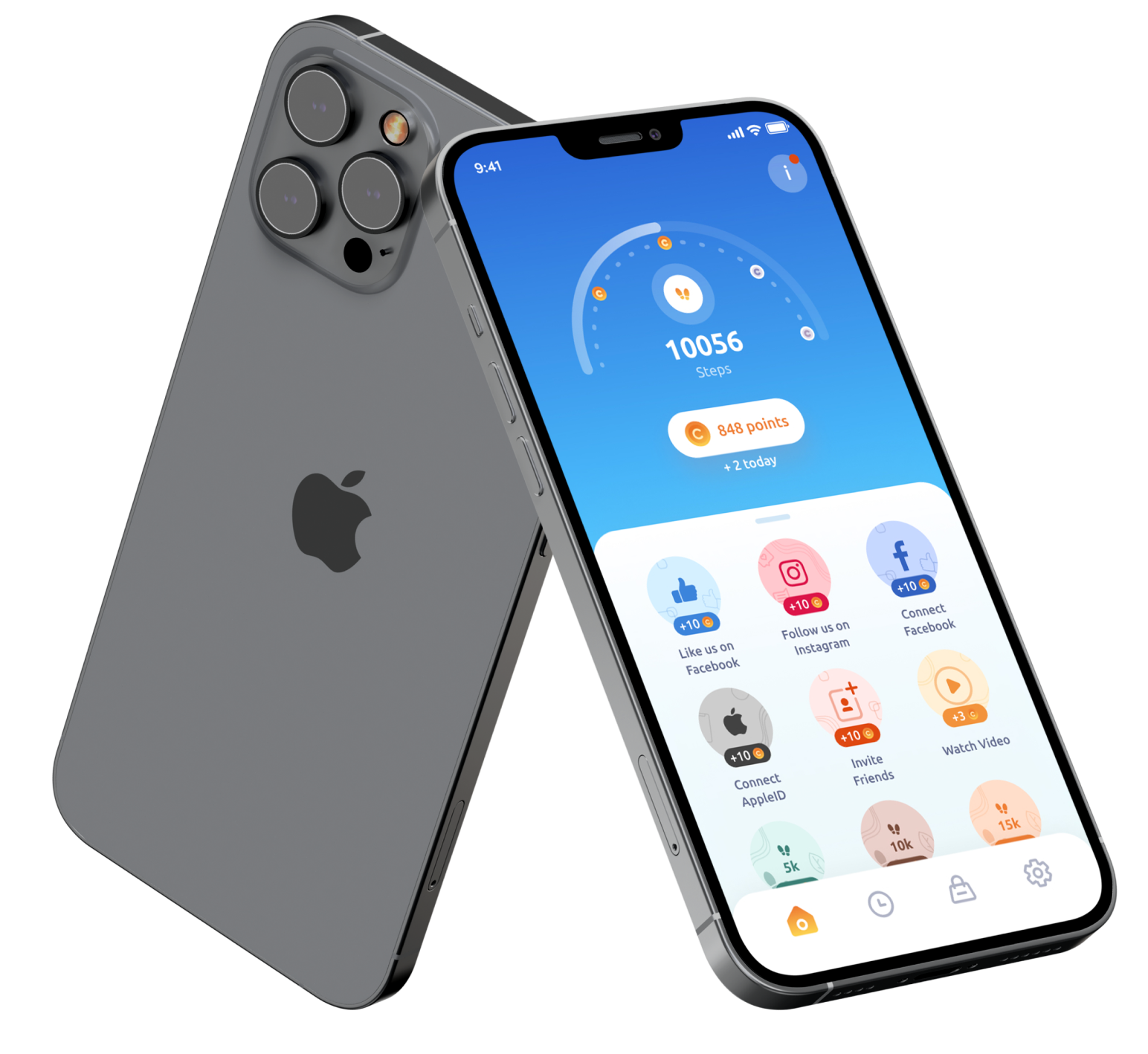
Agile homescreenThe user dashboard includes all the information about daily progress. The app has an onboarding procedure explaining how the app works and navigates you through the main functionality. 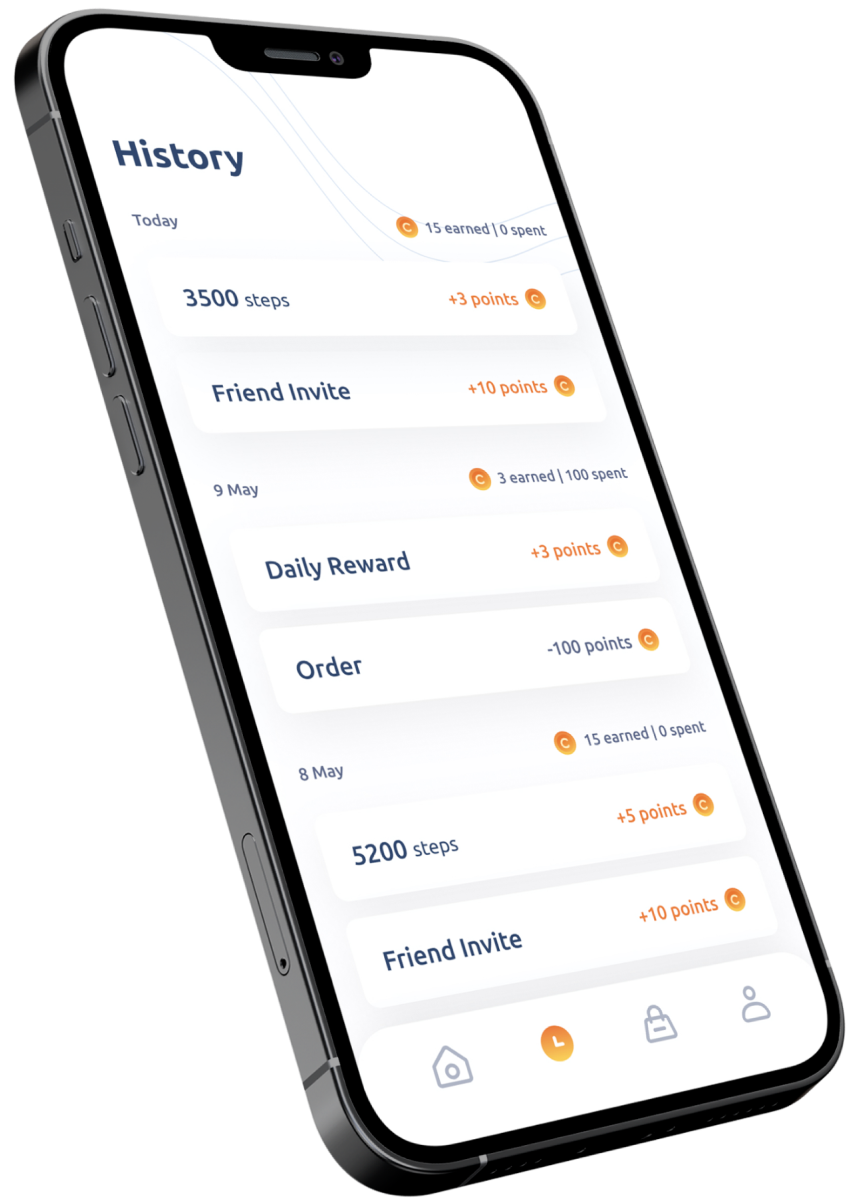
Track the progressJournals with details about points transactions. The user can see the list of activity and the number of points that have already been converted from the taken steps.


How the work went
From the first call to an app in two stores, and the support that kept it there.
Business analysis and scope
We started from the business model rather than the screens: how steps turn into points, what a partner gets, and which numbers the app has to be honest about. That gave us the feature list and the order to build it in.
Product and UI design
A step counter is opened several times a day, so the main screen had to answer one question at a glance. We designed the daily view, the rewards catalogue, and the progress states around that, and kept one visual language across iOS and Android.
Cross-platform mobile development
One React Native codebase for both platforms, with native modules for the Apple Health and Google Fit step data. Shared code kept the two stores in sync as features landed.
Backend, integrations and the points economy
Node.js, NestJS, GraphQL and MongoDB behind the app: step storage and sync, the points ledger, the partner catalogue, and integrations with Apple Health and Google Fit.
QA, launch and support
Testing on real devices across a range of phones, then release to the App Store and Google Play. We stayed on after launch for support, performance work and new features.
The parts that decided the app
Three problems that would have sunk a step tracker, and how we solved them.
Steps synchronization speed
The application synchronizes all the taken steps. We have developed an effective system for storing steps in the database, an algorithm for their synchronization, and also conducted several performance tests. Due to the Google Fit and Apple Health integration, users can synchronize any steps in the app from a number of devices that support it.
Anti-cheat checks
The logic of operations is crucial for every step counter app. Thus, the app should not count the steps that are intersected and should recognize that step two follows after step one. That is why checks for anti-cheat regulate the step counting process, so there could be implemented the ban on the self-entered steps in Health-Fit.
Orders management
Since the app allows users to exchange points into the real products, the high-quality order management systems are a must-have feature. To achieve maximum results and convenience in managing orders the Zendesk ticket system was integrated into the mobile app.
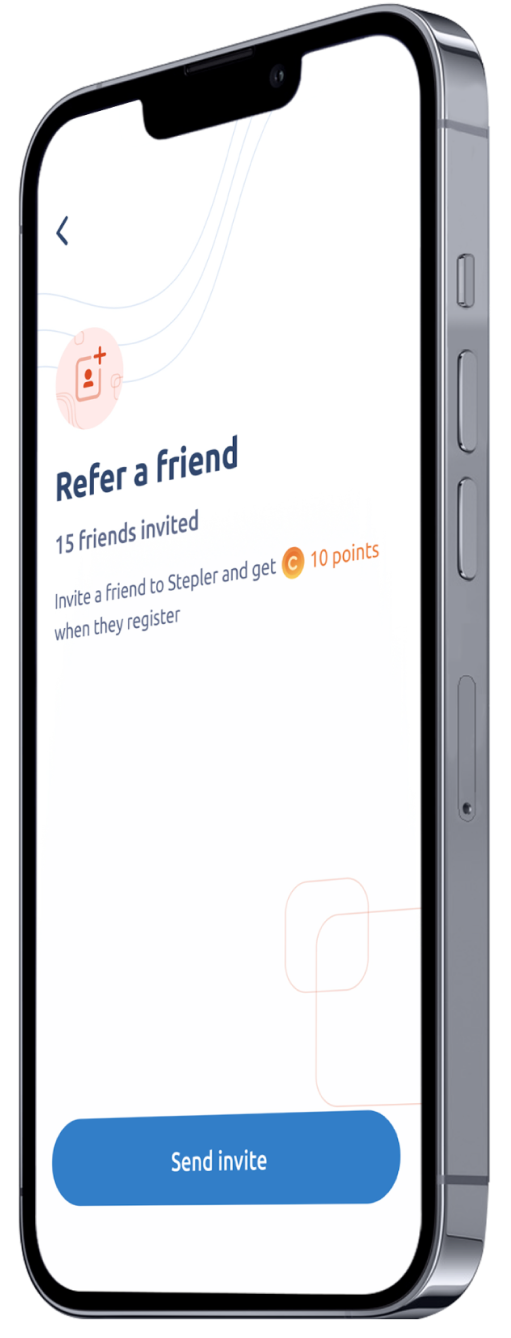
Invite anyoneThe user can get additional points for inviting friends or family members. Initiate step challenges among your friends. It is a fun yet healthy activity for everyone. 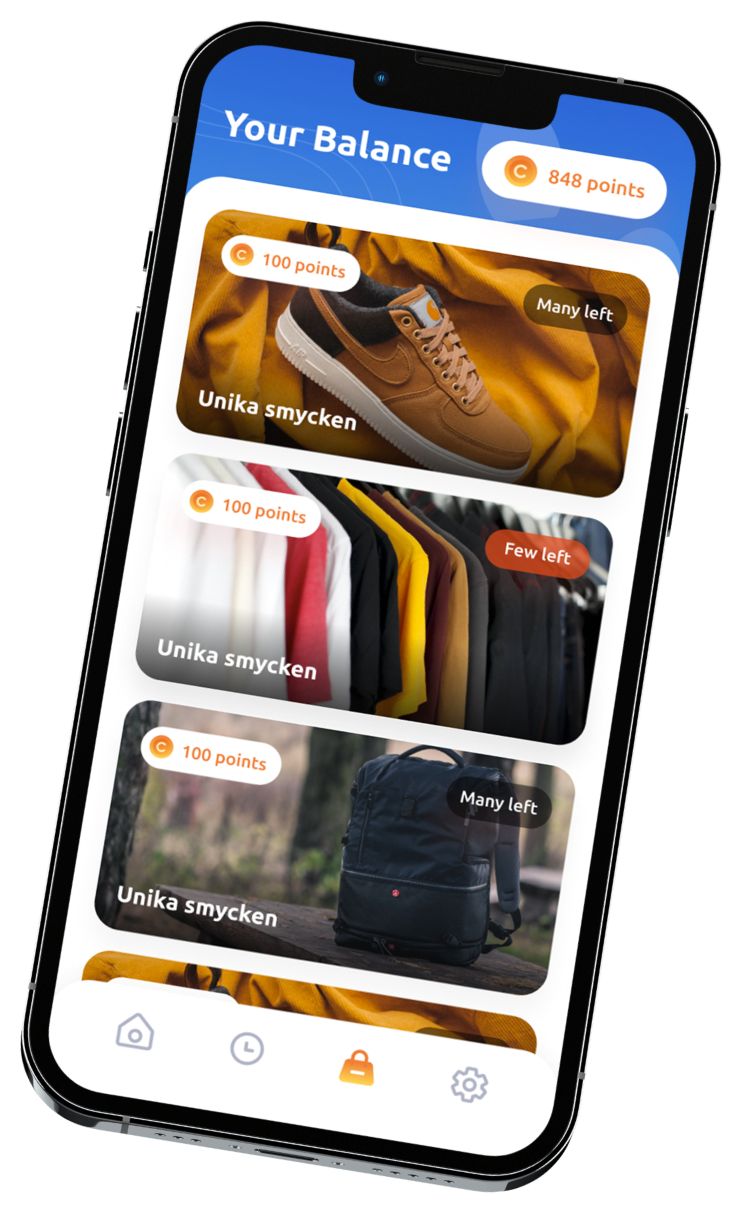
Exchanging optionInstead of usual discounts, the user gets the real products and services. The list of offers that users can get for their earned points includes local and international brands.


Outcome
The Stepler was developed as a pedometer and step counter app for people to motivate staying healthy and fit. We focused on making the app intuitive and memorable yet simple. We cared about the smallest details to make their clients’ lives easier.
The app launched as the #1 fitness app in the Swedish App Store and grew to millions of users across 12 markets, with reward partners like Nike and Adidas and even a Stockholm pop-up store. It pairs step tracking and a points-for-rewards economy with an AI coach.
Building something in this shape? Tell us about it, or get a range in two minutes.
Questions about this build
Who built Stepler?
2muchcoffee built Stepler, a fitness app that launched as the #1 fitness app in the Swedish App Store and grew to millions of users across 12 markets, with step tracking, a points-for-rewards economy, and an AI coach.
What does fitness app development with 2muchcoffee involve?
Full-cycle mobile development: business analysis, design, iOS and Android engineering, health-data integration (Apple Health, Google Fit), a rewards economy, and post-release support. Stepler was built on React Native, Node.js, NestJS, GraphQL, and MongoDB.