
E-commerce that survives
a launch campaign
The storefront is the easy part. What breaks under a launch or a Black Friday spike is the checkout, the inventory sync, and the payment reconciliation underneath. We build commerce platforms that stay fast and consistent when the traffic and the order volume actually arrive.
Get a build estimateThe product grid is the easy part
Checkout is where money leaks
Every extra second and every avoidable step drops conversion. A checkout that stays fast, resilient, and consistent under load is real engineering, not a template you drop in at the end.
Inventory has to stay honest under load
Two customers buying the last item at once, a flash sale, a sync with a warehouse system: overselling and stale stock are data-consistency problems, and they surface exactly when traffic peaks.
Payments must reconcile to the cent
Orders, refunds, partial captures, marketplace payouts, and tax all have to add up. We have shipped Stripe Connect and ACH bank payments on live marketplaces, where a reconciliation bug is a real one.
What we build for commerce and retail
From a headless storefront to the systems behind the order. We build the parts that decide whether a launch converts or falls over.
Headless and custom storefronts
Fast, SEO-strong storefronts on Next.js in front of a commerce backend or CMS, so pages arrive as HTML and stay quick as the catalog grows. Build Best Shop runs a luxury drop storefront this way, on Shopify Headless and React, with editorial layouts and sold-out states that stay premium after inventory clears.
Checkout and payments
Conversion-tuned checkout with Stripe or your processor: cards, wallets, subscriptions, partial captures, and refunds, built to stay consistent under load.
Inventory and order management
Stock, orders, fulfillment, and returns kept honest across the storefront, the warehouse, and any marketplace. Stock stays honest when traffic spikes.
Marketplace and multi-vendor
Multi-seller platforms with per-vendor payouts, commissions, and onboarding on Stripe Connect, where the money has to reconcile per seller.
Platform migrations and integrations
Moving off a slow legacy stack, or wiring a storefront to an ERP, PIM, or CRM, incrementally, without going dark for a rebuild.
The stack we build commerce on
From a headless frontend to the payment and data layer behind it: Next.js and React, Node.js and NestJS in TypeScript, PostgreSQL and Redis, Stripe and Stripe Connect, a headless CMS, Algolia, AWS and GraphQL.
Why commerce breaks under a launch
Rendering products is the easy part. Checkout, inventory, and payments are what actually break when a campaign sends real traffic and real order volume at the same moment.
Checkout that holds under load
The path to payment is the most performance-sensitive flow in the app. We build it to stay fast and resilient when concurrent orders spike, not just when one tester clicks through.
Inventory that stays exact under contention
Stock counts have to be right when two people buy the last item at once. We treat it as a concurrency and data-consistency problem, tested against contention, not a happy-path counter.
Idempotent payments and webhooks
A retried request or a duplicated processor webhook must never double-charge or double-fulfill. Payment and order transitions are idempotent by design.
Integrations that stay in step
ERP, PIM, warehouse, and marketplace feeds sync deliberately, so the storefront, the backend, and the fulfillment system stay in agreement about an order.
Custom build vs off-the-shelf vs patchwork freelancers
How building commerce software with one team compares to a template platform or piecing it together across separate hires.
Tuned to your funnel and load
Generic, limited control
Different assumptions per hire
Engagement models
Pick the model that fits your stage. You can change it as your roadmap changes.
Dedicated developer
One senior engineer, full-time on your commerce platform and managed by you.
- Full-time on one platform
- Works in your tools and process
- Design, QA and code review behind them
- Monthly rate, scale up or down
Best fit for an ongoing roadmap.
Dedicated team
A cross-functional pod covering storefront, backend, and payments, ready to ship end to end without growing your headcount.
- Storefront, backend and payments in one pod
- Ships end to end
- Works with the team you have
- Scales with the roadmap
Best fit for a build that spans several layers at once.
Project-based
A scoped build or platform migration, delivered end to end against a fixed plan, price, and timeline.
- Fixed scope and plan
- Fixed price and timeline
- Migration while the store keeps selling
- Handover included
Best fit for a defined piece of work with a clear finish line.
Case studies
Products our engineers shipped under the same kind of constraints.

Building or scaling a commerce platform?
Tell us what you're building and we'll tell you honestly what it takes to survive a launch.
Get a build estimateQuestions
Do you build custom storefronts or work with platforms like Shopify?
Both, and we help you choose. A headless custom storefront on Next.js gives you full control of performance and UX; a platform like Shopify is faster to launch for a standard catalog. We build custom where the operation needs it and integrate with platforms where they fit, rather than defaulting to one.
Can your checkout handle a Black Friday or launch spike?
That's exactly what we build for. Checkout is the most performance-sensitive flow in a store, so we build it to stay fast and consistent under concurrent load, with idempotent payments so a retried request never double-charges.
How do you stop overselling when stock runs low?
We treat inventory as a concurrency and data-consistency problem, not a simple counter. Stock stays honest when two customers buy the last item at once, tested against contention rather than the happy path.
Can you build a multi-vendor marketplace with per-seller payouts?
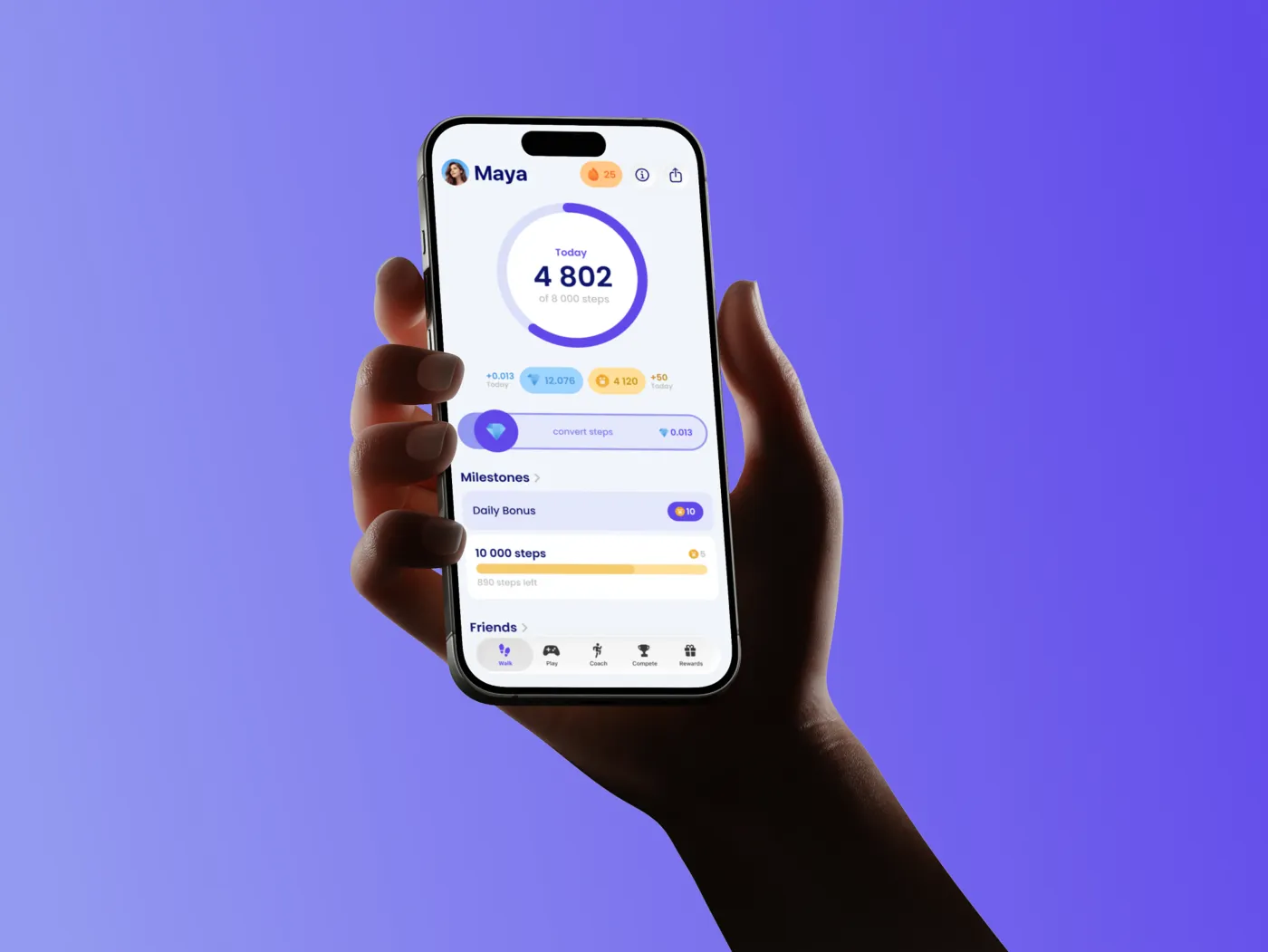
Yes. We shipped Stripe Connect marketplace payouts and ACH on Stepler, the Swedish fitness app with 10M+ downloads, where per-vendor payouts and reconciliation have to be exact.
Can you migrate our store off a slow legacy platform?
Yes, incrementally. We move the storefront and integrations across in phases so the store keeps selling throughout, rather than going dark for a big-bang rebuild. We carry SEO across deliberately so rankings hold.
How do we start, and what engagement models do you offer?
Three ways: a dedicated developer, a cross-functional team covering storefront, backend, and payments, or a scoped fixed-plan project. Shipping software since 2015, 5.0 on Clutch across 26 reviews.
Contact our team

 Our team contacts you within 24 business hours
 We collect all the key requirements from you
 The team of developers prepares estimation
 We can sign NDA since we respect the confidentiality of our clients