AI development The Vibe-Coded Fintech That Double-Charged Everyone: Production Correctness for AI-Built Money Apps AI builds the easy half of a money app in a weekend and silently skips the half that matters. The double-entry invariant nobody wrote, the missing idempotency key, the reconciliation that quietly returns zero. What hardening an AI-built money system actually takes.
AI development When the Money Doesn't Tie Out: Reconciliation Across Your Ledger, the Processor, and the Bank Your ledger says one thing, the processor's report says another, the bank says a third. Until those three agree you don't know what happened, you know what your code thinks happened. Three-way reconciliation is how you find the gap before a customer does.
AI development The Ledger Is the Source of Truth: Double-Entry, Immutable, and Why You Never Store a Balance Store a balance in a column and you have already lost. The 1494 answer, double-entry, append-only, money as whole cents, and a balance you derive instead of store, is still the only model that survives a reconciliation and an audit.
AI development Payments Done Right: Idempotency, Webhooks, and the State Machine That Stops Double Charges The payment that hurts isn't the one that fails loudly. It's the one that succeeds twice. Idempotency keys, webhook discipline, and a charge modeled as a state machine are what stop a retry or a redelivered event from charging a customer twice.
AI development How to Build Fintech Software in 2026 (and What's Still Standing in 2028) Most fintech products don't fail on the features. They fail on the money math, and the money math was never what the demo showed. A builder's map to what decides it: idempotent payments, an immutable ledger, reconciliation that ties out, and the moat that compounds by 2028.
EdTech The Compliance Fortress: Biometric Privacy, GDPR, and COPPA for EdTech Platforms The thing that ends an edtech company usually isn't a competitor, it's a lawyer. Pearson paid $18.2M to settle a biometric privacy case for scanning faces without consent. In this market, compliance is a load-bearing part of the build, and most how-to guides skip it entirely.
AI development Online Exam Proctoring as a Chrome Extension: Integrity Without the Spyware Reputation Students will smear lotion on a webcam to blind the proctoring AI. That's the real state of the art on the cheating side, and it's exactly why verified practice is worth more, not less, as AI makes cheating trivial. How to build integrity as signals plus a human, not surveillance theater.
AI development The AI Tutor That Doesn't Lie: Grounding SAT Math So It Stops Teaching the Wrong Method An AI tutor that's confidently wrong is worse than no tutor. Language models fail most multi-step SAT math because they read numbers as text, and they fail in the same sure voice they use when they're right. The fix is architectural, not a better prompt.
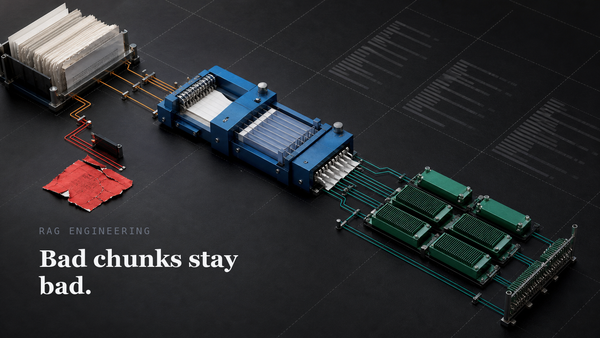
AI development RAG Over Messy PDFs: OCR, Structure-Preserving Chunking, and Incremental Re-indexing Every RAG demo works on a clean PDF. Then you point it at a decade of scanned contracts and it returns confident nonsense. The chunk is the unit of retrieval, and three moves decide whether yours are any good before the model ever runs.
EdTech Who Actually Leads SAT Prep in 2026? Nobody, and That's the Opening The most-repeated facts about who leads SAT prep fail a fact-check: a $1.75B acquisition that never happened, market shares that trace to a content farm, a user count frozen since 2020. What's actually true in 2026, and why the serious players are building their own platforms.
EdTech Build vs White-Label for an SAT Prep Platform: When Each One Wins The most expensive mistake in this market is building the wrong half. The real question isn't build or buy, it's what the platform is to you: a channel for your tutoring, or the product itself. One answer is a few weeks, the other is the right call only if the hard engine is your actual edge.
AI development Diagnostic Analytics for SAT Prep: Careless vs Concept vs Pacing A score report that says 640 Math tells a student nothing they can act on. The product is the sentence after the number: which misses were careless, which were concept gaps, which were pacing. Same wrong answers, three opposite fixes, and the layer that compounds into a moat.