Skip to content
Web apps built to scale
·
Since 2015
2MUCH
COFFEE
AI
Services
Technologies
Portfolio
Company
Estimator
Blog
Get a quote
AI
Services
Technologies
Portfolio
Company
Estimator
Blog
Contact us
Tag
AI development
AI development
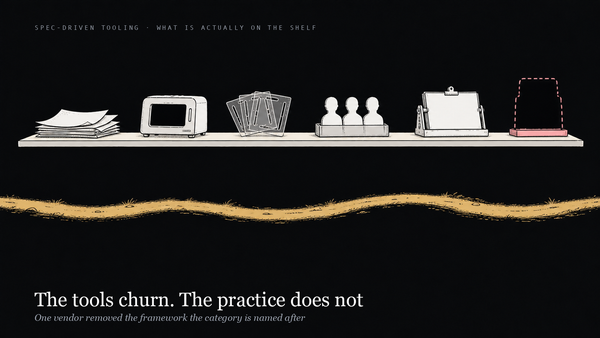
Spec-Driven Development Tools: What Each One Is, From a Team That Uses None of Them
Spec Kit, Kiro, OpenSpec, BMAD and Tessl, read from their own docs and changelogs rather than their launch posts. What each actually is, what it costs to adopt, and why the tool layer churns while the practice does not.
Aug 2026
AI development
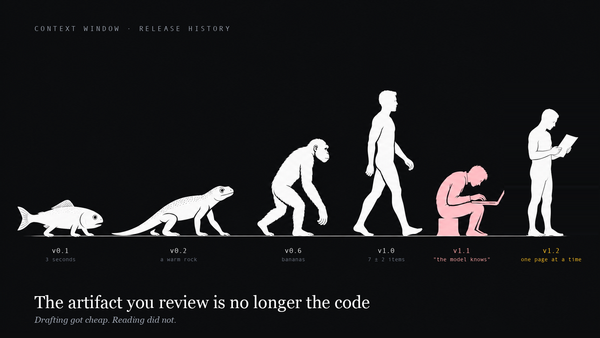
Spec-Driven Development: What Actually Changes When the Doc Comes First
Most explanations of spec-driven development define the term. This is the loop we actually run, why the spec became the reviewable artifact once a model could write the code, and what it costs to keep it running.
Aug 2026
PropTech
The AI Layer That Can't Hallucinate: Grounded Listings, Search, and Lead Agents
An AI that invents a bedroom, a square-foot count, or the wrong HOA fee isn't a typo in real estate. It's a misrepresentation, and the licensee carries the liability, not the model vendor. The fix is grounding plus a review step that flags invented facts before anything reaches a buyer.
Jul 2026
PropTech
Building a Property Management Platform in 2026: Rent Rails, Maintenance, and the Trust-Accounting Trap
A property management platform looks like a CRUD app and behaves like a bank. You're holding other people's money and dispatching emergencies at 2am, and the part that ends careers is the boring one: mixing owner funds, rent, and security deposits in a way the state writes into statute.
Jul 2026
PropTech
The Real Estate CRM: Speed-to-Lead, Multi-Role Data, and Why Generic CRMs Break
A real estate lead has a five-minute fuse, and the same contact is a buyer, a seller, and a past client at once. Generic CRMs break in real estate because they model contacts and deals, not the transaction and the roles, and that gap is where deals and client trust leak out.
Jul 2026
PropTech
The Valuation Engine You Don't Own: Building an AVM People Can Trust
On-market, an automated valuation looks impressive. Off-market, where the model can't see the new kitchen and can't peek at a list price, accuracy roughly triples in error. You're standing behind a number a family makes a six-figure decision on, and the moat was never the model.
Jul 2026
PropTech
The Compliance Fortress: Fair Housing, Algorithmic Bias, and FCRA for Real Estate Platforms
When your platform's AI decides who sees a listing, who gets approved to rent, or what a home is worth, and it discriminates, the question isn't whether the model meant to. It's who is liable: the developer, the deployer, or the brokerage. The architecture you choose is the answer.
Jul 2026
AI development
How to Build a Real Estate Platform in 2026 (and What's Still Standing in 2028)
Most real estate platforms don't fail on the engineering. They fail because the team built a listings app, and the problem was never listings. A builder's map to the parts that actually decide it: the MLS data layer, valuation fidelity, the trust layer, and the moat that compounds by 2028.
Jul 2026
AI agents
The YC Batch That Barely Hires: What Spring 2026 Says About the Cost of Software
Four days before Demo Day, 34 of 196 companies in YC's Spring 2026 batch were hiring anyone at all. A look at the batch that builds with agents and almost no people, and what it means if you sell engineering work.
Jul 2026
Python
RLS for Agents: Row-Level Security in LangGraph and Multi-Tenant LLM Workflows
An agent we shipped last quarter returned a row from the wrong tenant. The agent did what the prompt asked. The database did what the agent asked. The third jurisdiction of every agentic workflow is the database, and Pydantic and TypedDict cannot reach it.
Jul 2026
AI development
Real-Time Market Data and Trading Infrastructure: Sub-Second Sync Without Lying to the User
A quote half a second stale is a quote that is wrong. A price that disagrees between the web and the app is a support ticket and a trust problem. Streaming market data at scale is a data-integrity bar, not just a websocket.
Jul 2026
AI development
Financial-Data Pipelines: Open Banking, Aggregation, and the Schema Drift That Breaks the Math
You wire up open-banking aggregation, ship, and three months later a bank renames one field and your money-leak detector quietly returns zero while every chart still renders. Aggregating financial data is a normalization and drift-detection problem before it is a feature.
Jul 2026
Page 1 of 3
Older Posts
→