Case study
The SAT prep platform that behaves like the real test
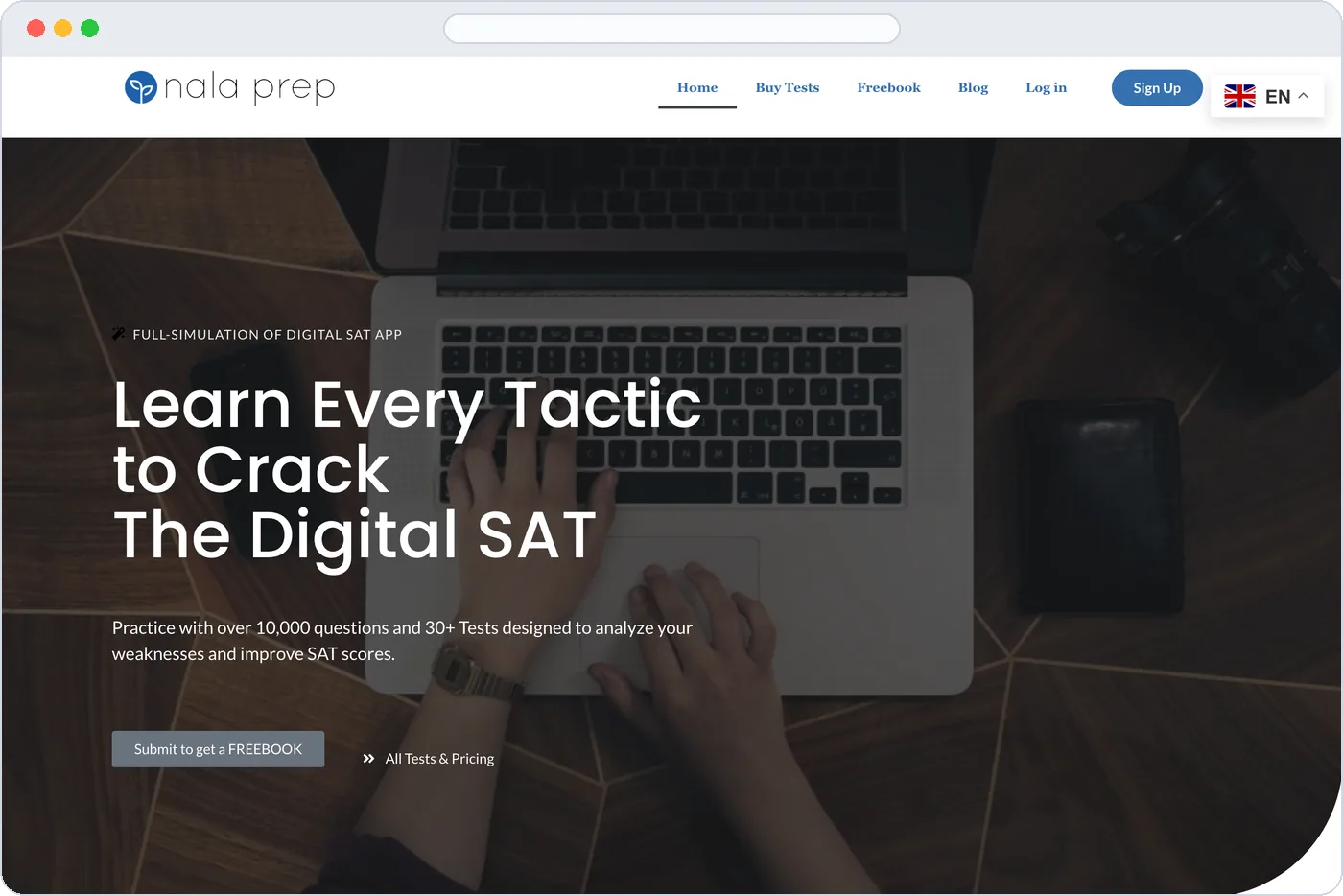
NALA Prep is a digital SAT platform: 10,000+ practice questions, 30+ full-length tests, adaptive scoring, AI diagnostic gap-scoring, and a 24/7 AI tutor kept grounded in the material. Our engineers delivered the full-stack build, from the test engine to the billing.
Building an EdTech product? Book a 30-min review
The product
Inside NALA Prep
Want one built like this?
At a glance
The problem
The hard part was fidelity to the real exam
Practice only transfers when it behaves like test day. Three problems decided whether NALA Prep felt like the real digital SAT or just another quiz app.
A simulation, not a quiz
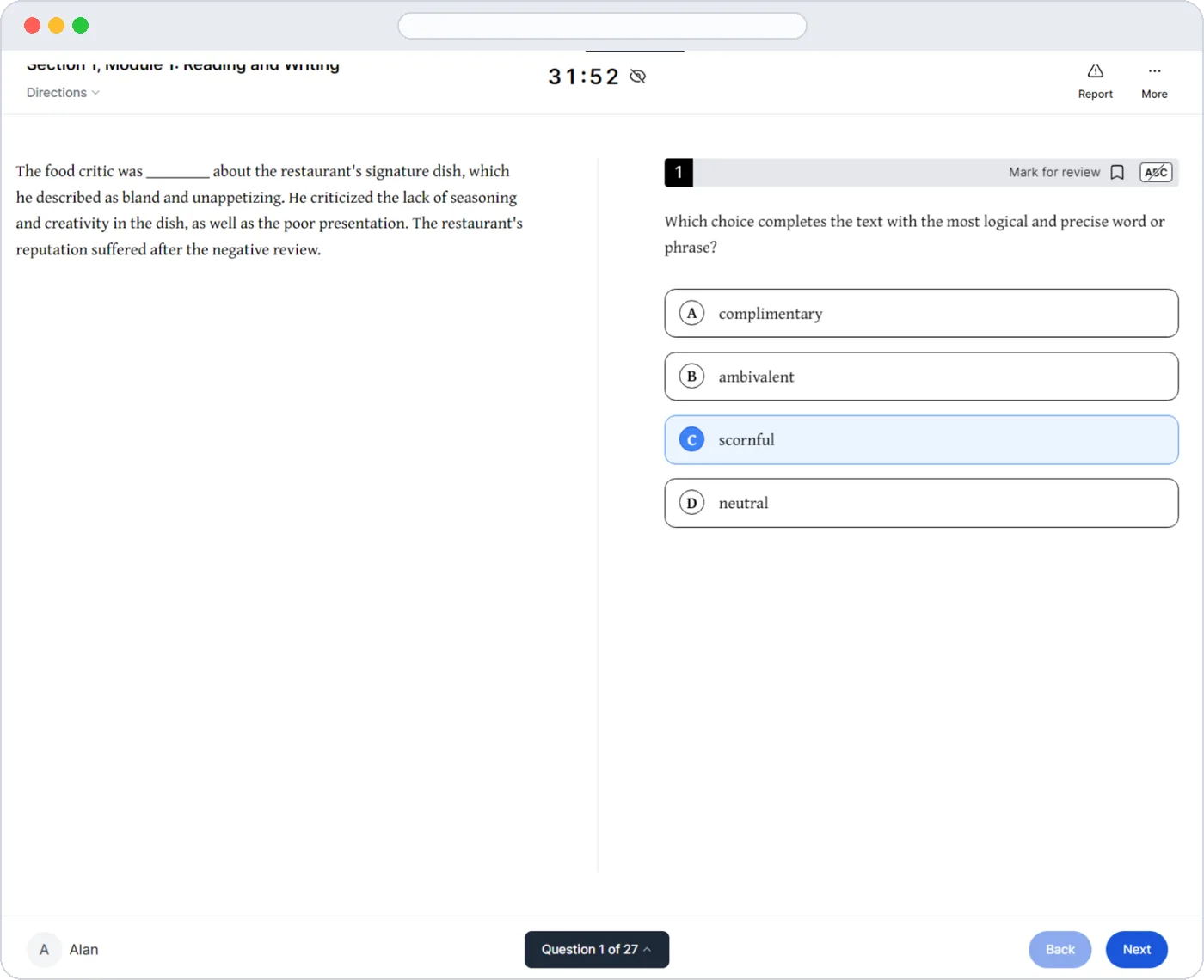
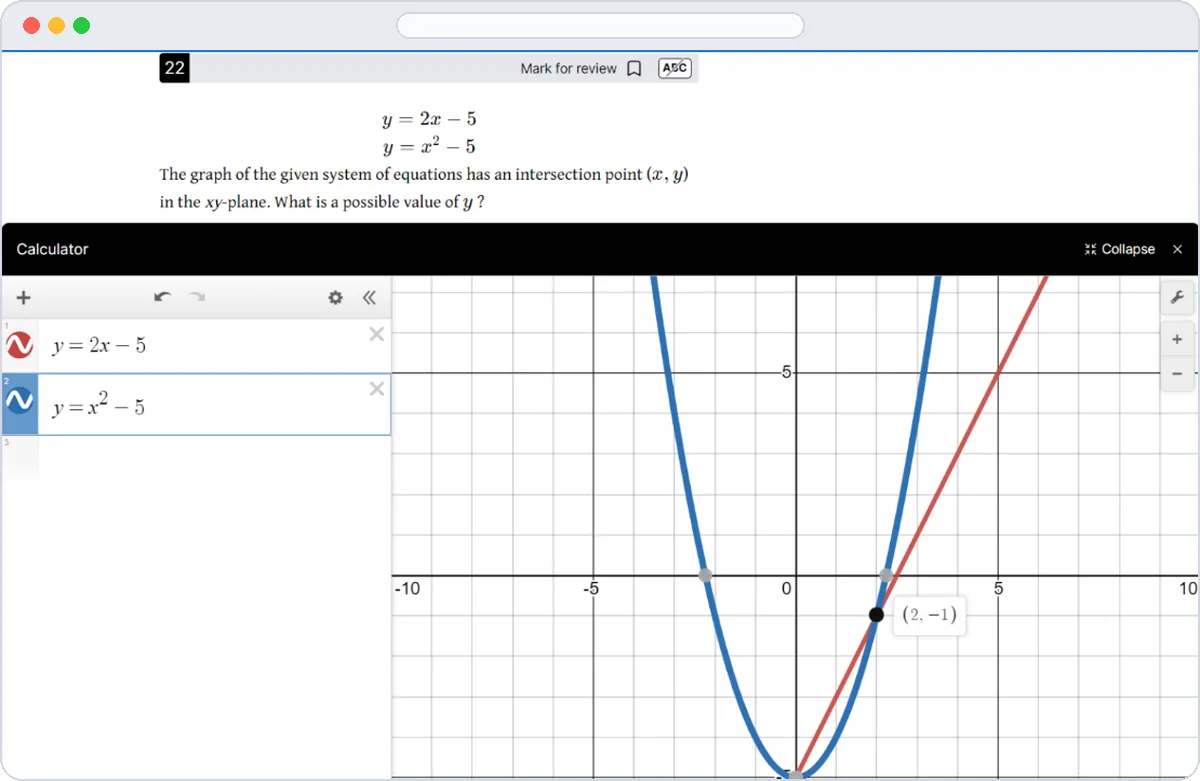
The digital SAT is module-adaptive and strictly timed, with its own tools: an embedded Desmos calculator, mark-for-review, answer eliminations. Every piece had to behave the way it does on test day, or practice builds the wrong habits.
Scores that say what to fix
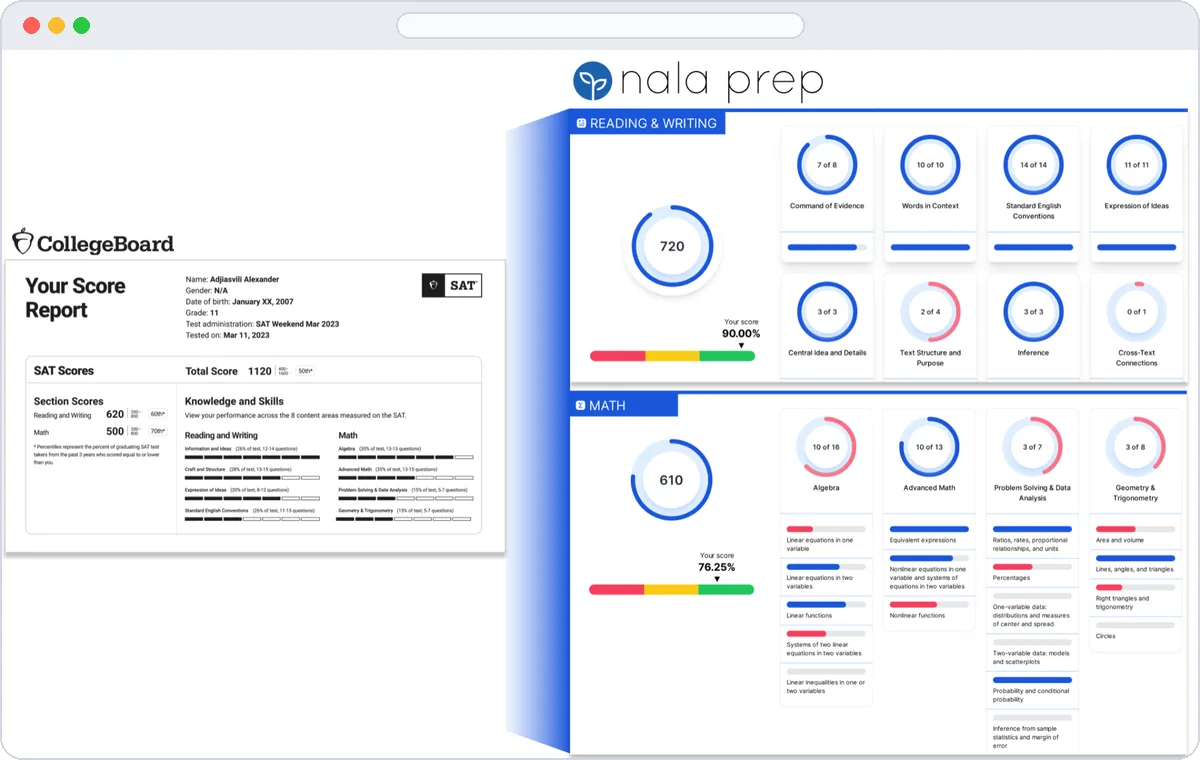
A section score tells a student where they stand, not what to work on. The scoring had to break every test down by skill and question type, so the next study hour goes where the gaps actually are.
An AI tutor that cannot bluff
Around-the-clock help is only worth shipping if the answers hold. The tutor stays grounded in the platform's own questions and explanations instead of improvising math, because a confident wrong answer costs a student more than no answer.
Scope
What we built


Building an EdTech product students have to trust? Let us scope it.
The build
How we built it
Mirror the exam
We built the test-taking experience to the digital SAT's own rules: module timing, question tools, and the embedded calculator, so nothing on test day feels new.
Score it like the real thing
The adaptive scoring system reproduces how the digital SAT weighs a student's path through the modules, which is what makes a practice score worth trusting.
Turn results into a plan
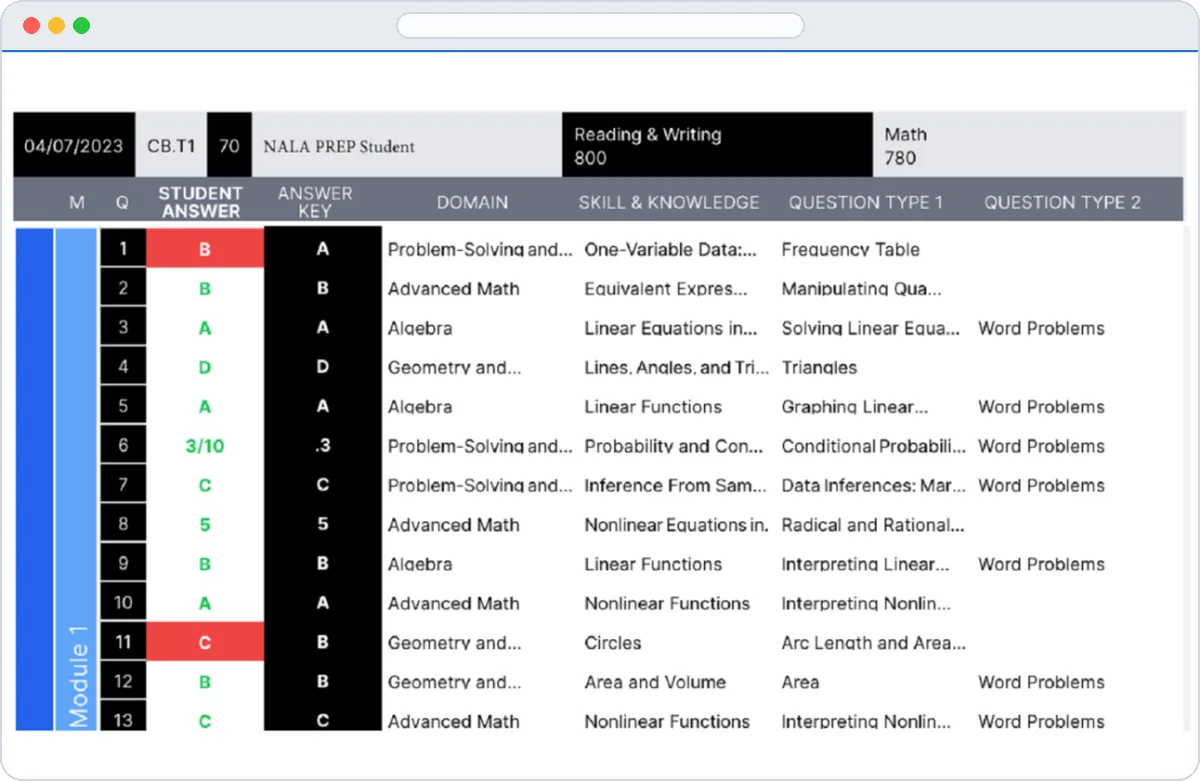
Answer reports tie every question to the skill it tests, and the gap-scoring rolls that into a per-skill picture a student can act on.
Keep the AI inside the material
The tutor answers from the question bank and its explanations. An ungrounded model improvises; we built this one so it cannot.
Shipped full stack on React, Next.js and NestJS, with Stripe handling checkout and recurring billing.
The engineering
The parts that were not obvious
The SSR bug that took real debugging
An obscure Next.js server-side-rendering failure on Fly.io took real debugging to pin down. It came with the territory: we took over an existing codebase and stabilized it while shipping features.
Recurring billing is a lifecycle
Stripe checkout is the easy half. Subscriptions renew, fail, retry and cancel, and every one of those states has to leave a student's access in the right place. The billing work was in the lifecycle, not the checkout button.
Fidelity lives in the small tools
The Desmos calculator, answer eliminations, mark-for-review, the timer's exact behavior: none of it is the headline feature, and all of it decides whether practice transfers to test day. We treated the details as the product.
Built with
The stack
Where it landed
FAQ
SAT prep platform development FAQ
How long does it take to build an SAT prep platform?
A production MVP typically takes 12 to 20 weeks. The test engine and billing move fast; the question bank tooling, the adaptive scoring, and the reporting depth set the pace. NALA Prep runs 10,000+ questions and 30+ full-length tests on that foundation.
What stack is NALA Prep built on?
React and Next.js on the front end, NestJS behind it, and Stripe for checkout and recurring billing, deployed on Fly.io. Our engineers delivered the full-stack build.
How does adaptive scoring work on the digital SAT?
The digital SAT adjusts the second module of each section to how a student performed on the first, and the score reflects that path. NALA Prep's scoring system reproduces that behavior, so a practice score means the same thing as a real one.
How is the AI tutor kept honest?
It is grounded: answers come from the platform's own question bank and explanations, not from a model improvising math. That constraint is the difference between a tutor students can trust at 2am and a confident source of wrong answers.




Let's build yours

 Our team contacts you within 24 business hours
 We collect all the key requirements from you
 The team of developers prepares estimation
 We can sign NDA since we respect the confidentiality of our clients